

Hey friends,
I hope you’re doing well and enjoying the holidays! I recently had an awesome conversation with my dear friend Ceibo — who is a land steward, homesteader, and a multidisciplinary creative. His “finca” and homestead project is located in Zaragoza, in the Nicoya Region of Costa Rica. He speaks in quiet sentences that carry weight. No jargon, no rush, just presence. And he walks barefoot—a lot! The man is slow, tapped-in, and full of practical wisdom which we dive into together.
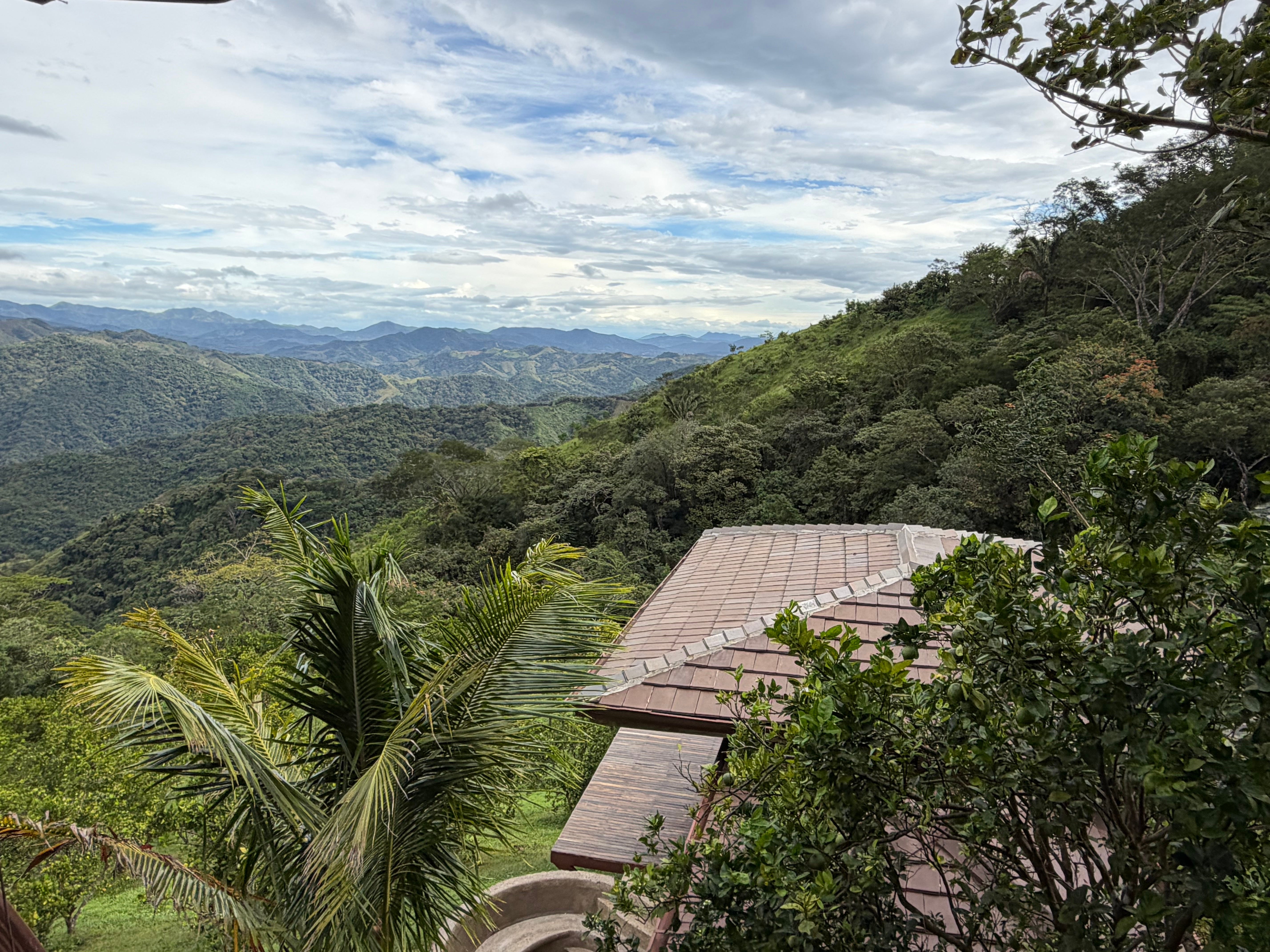
Twenty years ago, I came to Costa Rica wanting exactly what Ceibo built: a home, a garden, land that could provide for myself and others. I got caught up in a lot of projects, life’s adventures, and big dreams and didn’t start my own home and garden until many years later. Visiting Ceibo’s place reminded me why I came here in the first place, to live on and with the land!
Please enjoy the lessons and key takeaways from our conversation below and check out the resources and free goodies section at the end of the Newsletter!
Homesteading Without the Hustle
What if your next move was to slow down, listen, and let the land set the pace? That is where my conversation with Ceibo began, and where it kept returning.
Before you move earth, move your body. Walk the site at sunrise and again at dusk, learn the wind, the water, and the footpaths people already use. Sit with the people in your community, understanding both their needs and their gifts. Share meals. If you do this, decisions get clearer and simpler. If you skip it, you pay later with conflict, rework, and fatigue.

The “Homesteading” definition that landed
I asked Ceibo to define homesteading…
His answer: “Creating a steady home.”
That’s it. Could be the house is organized. Could be your water source. Could be you’re growing your food and detaching from systems that don’t serve you. Homesteading is about settling in, getting grounded, building steadiness in an environment that wants to move fast.
Take it Slow and Steady!

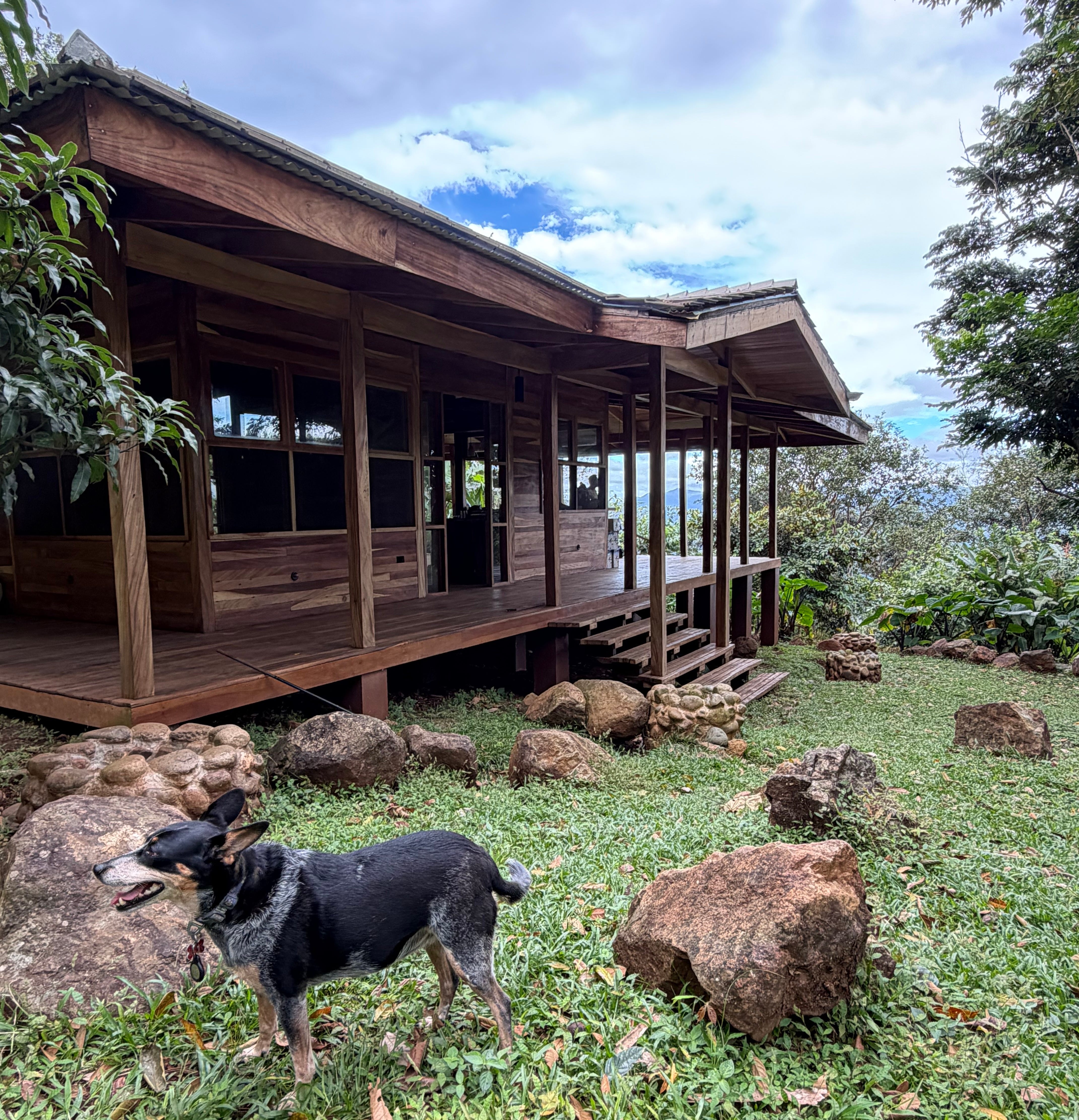
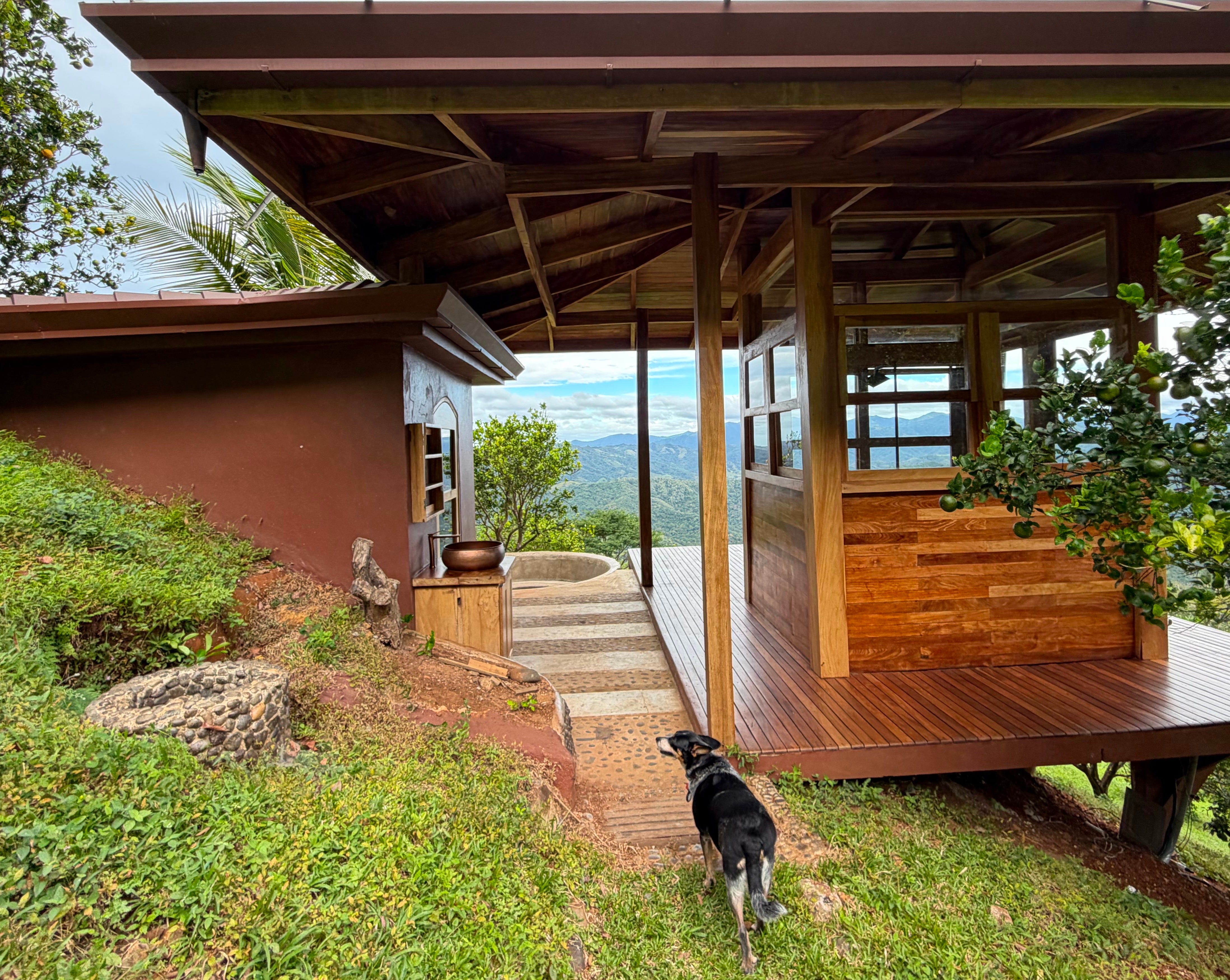
Ceibo’s owned this land for seven years. He’s built one cabin, a music space + yoga shala, and a bathhouse. That’s it! Ceibo didn’t front-load cash into this place. He built as he could afford it, balancing the farm work with his music projects. Some years the farm got more attention, some years less. Life happened. Curveballs came. The project adapted.
People often throw large sums of money at land projects here, hoping for speed, and the results speak for themselves. I’ve seen 80-acre food forests planted in one shot where 70% of the trees died. Scale doesn’t always work when you skip the learning curve. You need to spend time listening to your land.
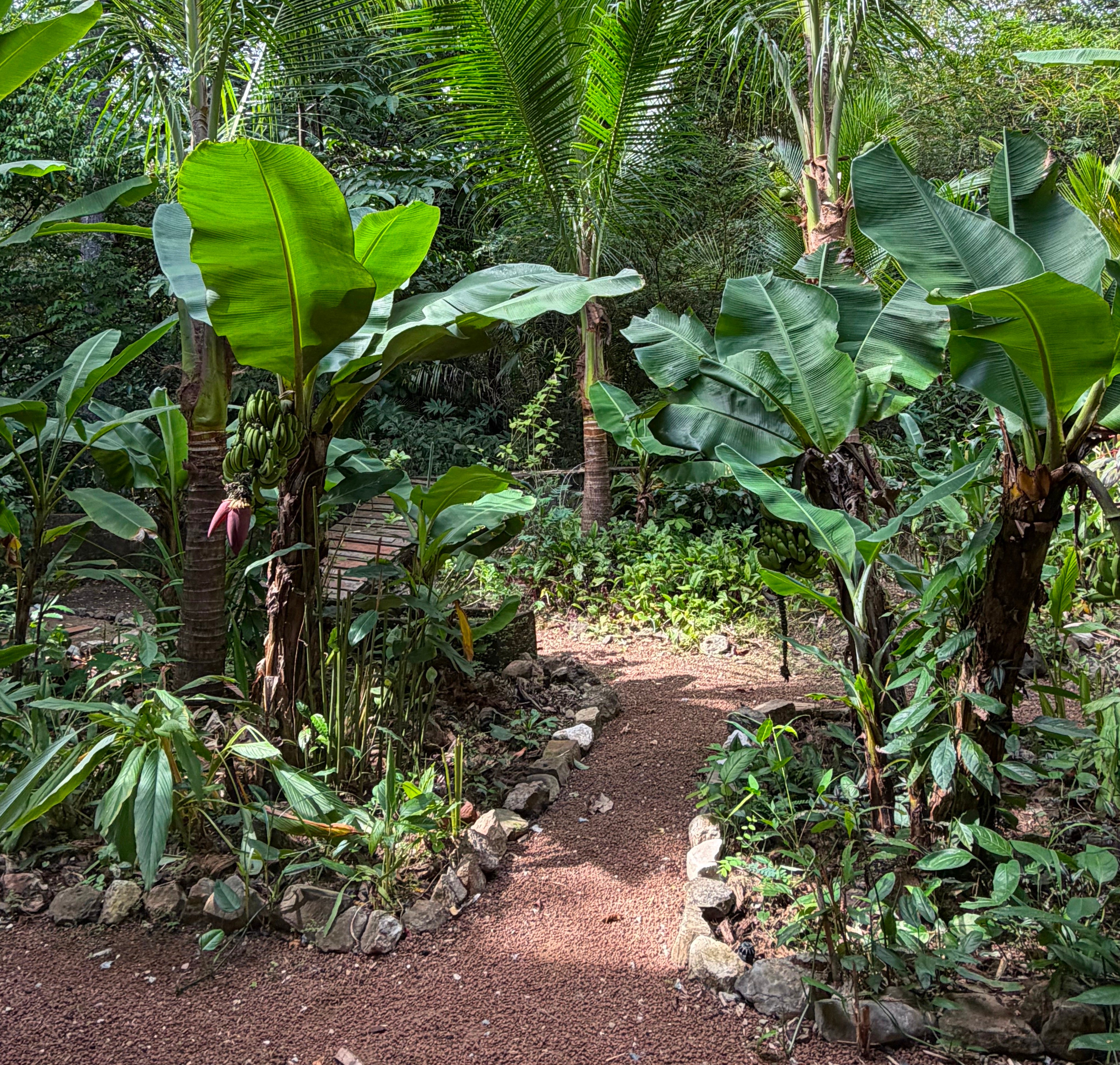
Ceibo did just that. He walked paths for months before deciding where they should go. He laid out rocks to mark where structures might go someday. He let the land tell him what it wanted before he imposed his plan.
He calls this the “scale of permanence.” Concrete is permanent. So is a jackfruit tree once it becomes a canopy.
Don’t rush into permanent decisions when you’re still learning the place.
What actually kills these projects and kills the joy?
It’s not lack of money. It’s not even the bumpy roads or the rainy season.
It’s chaos. Overcomplexity. Too many systems requiring too much attention. Ceibo told me his whole approach is built around organization, simplicity, and not creating reactions that generate more chaos. Ceibo’s systems just work from the food forests, to water management, and beyond. The paths people actually use are the ones he built as he walked the land. Fewer moving parts means fewer failure points and less dependency on expertise that might leave.
What you can actually do, now!
Start where you are. Ceibo was clear on this.
If you’re in New York City, volunteer at a CSA. Go upstate and get your hands dirty. If you’ve got a tiny lawn, do something with it. If you’ve got a window, grow herbs. Watch how the plant responds to light. Move it when it needs moving. That’s the practice.
The people asking me about retreat centers and eco-villages are often missing this step. They haven’t tended anything yet. Start with one houseplant. Learn how it slows your brain down. Feel what it’s like to care for something that isn’t human.
Why this all matters…
I watched Ceibo talk about his farm and the steadiness it gives him. He built something that works on a human level, for his wellbeing, and for the planet’s. In the process, it’s shaped who he is, inside and out. A slow, thoughtful, methodical, and aware human being that I’m grateful to call my friend!
If you’re drawn to land stewardship, if you keep thinking about growing your own food or building a home somewhere quieter, this is where you start. Not with the vision board. Not with the land hunt. With the practice of tending. Of going slow. Of letting the place set the pace.
Key Lessons
Go slow on purpose. Walk the land barefoot before you hire the architect. Learn the wind, the water, the paths that already exist.
Measure steadiness, not speed. A steady home beats a chaotic compound every time. Organization and simplicity create the foundation everything else builds on.
Scale of permanence. Let the permanent decisions wait until you actually know the place.
Keep systems simple. If it requires an expert to run it, you’ve over-engineered. Build things your future self can maintain on a hard day when help isn’t coming.
Don’t front-load cash. Money thrown too fast at land creates beautiful structures with shallow roots. Build as you can afford it. Let the project grow with you, not ahead of you.
Start small, start now. Houseplants if you’re in the city. A tiny garden if you’ve got a yard. CSA volunteering if you’ve got weekends. The practice of tending is what matters, not the scale.
Build revenue streams. Homesteading isn’t about total self-sufficiency. It’s about resilience. You still need energy exchange flowing in, whether from the land or from other work you love.
Next time I’m up at Ceibo’s farm, we’re going deeper on specific systems—composting, water, food preservation. If this is your thing, stay tuned.
Handpicked Resources & Free Goodies for You!

Living Systems Design: A permaculture certification for a regenerative generation!
Join Ecoversity for a free, live conversation on how to design your life, work, and surroundings to work with nature instead of against it, so that what you build supports both your own well-being and the world around you. Ecoversity is a global education network helping people apply practical, nature-based solutions in their homes and communities.
Hosts: Stephen Brooks, Co-Founder of Ecoversity, and Penny Livingston, permaculture educator with over 40 years of experience
When: Jan 7 at 11 AM PST
👉 Reserve your free seat to the Open House: [Link]
No prior experience is needed. If you care about the Earth and want to explore practical ways to create positive change, this Open House is a great place to begin.
👉 Or Dive Right into the Living Systems Design Program: [Link]

To Your Thriving Life,
Edward Zaydelman
Live the Possibility
@edwardzaydelman / Pinterest / YouTube
Important Links:
Questions? Just hit reply - I read every email personally.


If you’re new to Live the Possibility...
My mission is helping visionaries like you bring sustainable land projects to life. After 18+ years developing properties and communities here, I’ve learned that success comes from balancing bold vision with practical execution. I support clients in creating projects that honor both their dreams and the land itself. Every decision should consider impact on the local community, environment, and future generations. This means taking time to listen to the land, build trust with neighbors, and develop clear strategies that work for all stakeholders.


